
Wasp nest removal in Ontario
Keep your distance and let us inspect, identify and treat the nest, then follow up. Quote details in 30 minutes.
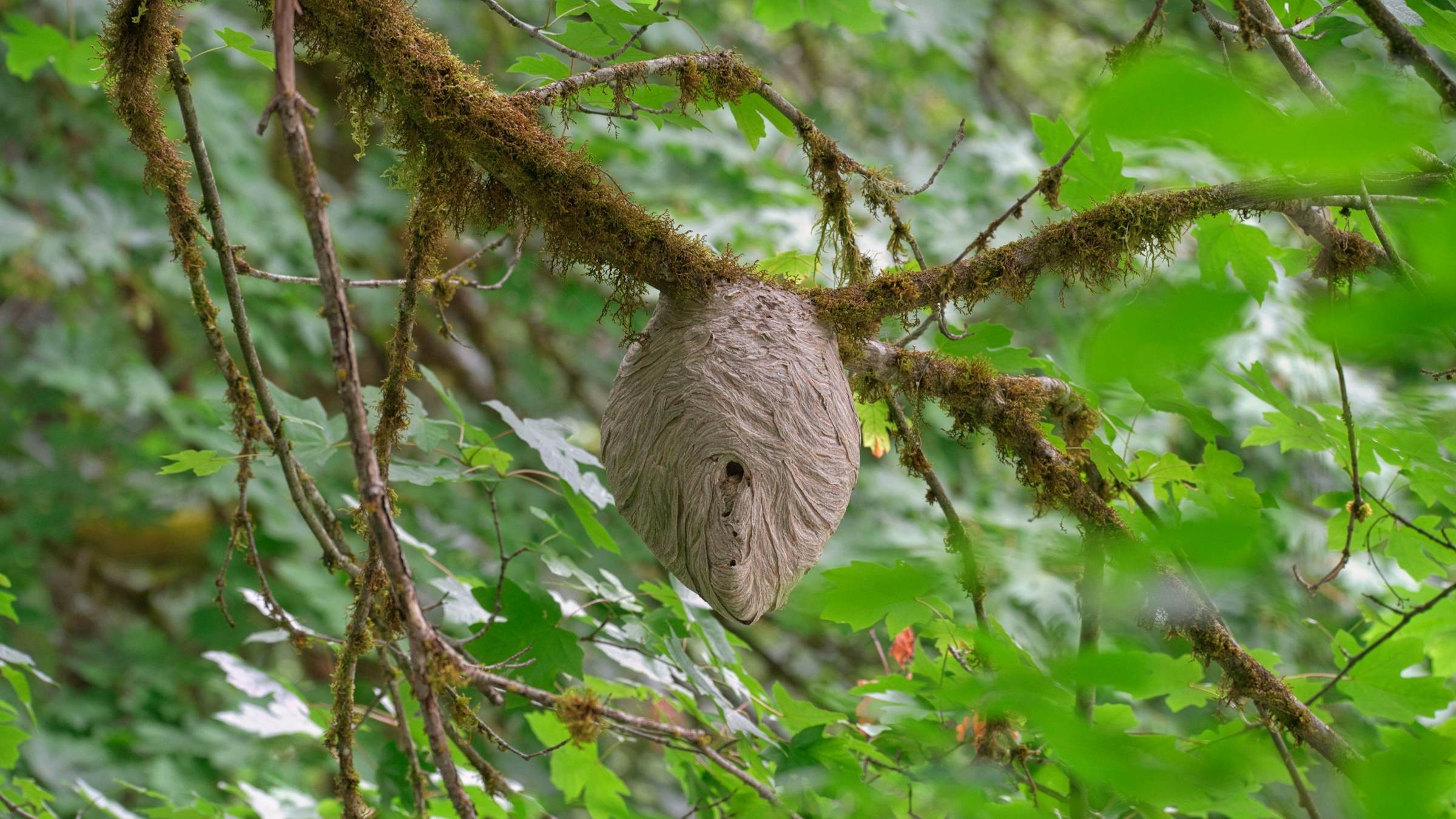
Finding a wasp nest near your door, deck or kids’ play area is stressful. The best first move is simple: stay back and keep others away. Then let a professional deal with it.
How does Pest Emergency handle wasp nest removal?
We follow four steps.
- Inspect. We locate the nest and check how people and pets use the area.
- Identify. We confirm which insect it is and where the nest sits.
- Treat. We treat the nest with methods suited to its location.
- Follow up. We confirm that activity has stopped.
Wasps are active mainly from July to September, so that is when most calls come in. Read more about wasps and our IPM approach.
What is the difference between wasps, hornets and yellowjackets?
Yellowjackets are a type of wasp, and so are hornets. Bees are a separate group.
Proper identification matters because the treatment, and the risk, depend on the insect. See our wasp identification page for what to look for. Do not get close to check.
Where do wasps build nests?
In the ground
Some yellowjackets nest in the soil. You may only see wasps flying in and out of a small hole. Lawn mowers often disturb them.
Under eaves and on structures
Papery nests can hang from eaves, soffits, sheds and railings.
In wall voids
Wasps can enter through small gaps and nest inside a wall. You may see traffic at one spot, or hear buzzing. Do not block the opening.
In trees and shrubs
Nests in trees can be high up or hidden by leaves.
Why is DIY nest removal risky?
Wasps defend their nests. The Royal Ontario Museum advises against swatting or provoking yellowjackets, because they release chemical alarm signals that call other wasps to attack.
That means a failed attempt can turn one wasp into many. Ladders and hard-to-reach spots add to the risk. For safety, we do not give step-by-step nest removal instructions. If you see a nest:
- Keep away, and keep children and pets away
- Do not spray it, knock it down or block the entrance
- Do not swat at wasps near it
- Call a professional
Will wasps leave on their own?
Eventually, yes. The ROM notes that after the first frost most workers die, and new queens overwinter and start new nests in spring. But that can take weeks of risk around your home. If a nest is near an entrance, play area or walkway, it is better to have it treated.
Do old nests get reused?
According to the ROM, new queens start nests in spring after overwintering. Even so, do not assume a nest is empty. Have it checked before you handle it.
When is the best time to remove a nest?
As soon as you notice a nest in a busy area. Nests near doors, decks or play areas are a risk every day they stay. Request a quote early rather than waiting for the season to end.
When should I seek medical help after a sting?
Wasp stings are painful but usually minor. Call 911 right away if anyone has trouble breathing, swelling of the face, lips or throat, dizziness or faintness after a sting. If you know you are allergic, tell us when you request a quote and keep well away from the nest.
Homes, businesses and where we work
We handle nests at houses and businesses across Ontario, including Vaughan and Oakville. Businesses with patios or loading docks can have nests too, so see our commercial pest control page. Another seasonal pest is fleas. See flea treatment.
Get a wasp nest removal quote
Tell us where the nest is and how close it is to doors or play areas. We send quote details within 30 minutes. We do not offer same-day visits, so keep clear of the nest while you wait.
Request a free quote and we will help from there.
When these pests are active
| Pest | January, current month | February, current month | March, current month | April, current month | May, current month | June, current month | July, current month | August, current month | September, current month | October, current month | November, current month | December, current month |
|---|---|---|---|---|---|---|---|---|---|---|---|---|
| Wasps pest page | quiet | quiet | quiet | quiet | active | active | active | peak | peak | active | quiet | quiet |
- Quiet
- Active
- Peak
- Outlined column = now
- Wasps: Includes yellowjackets. Colonies are biggest in late summer; frost ends them.
How a quote works
Tell us what you found
Describe the pest and the property in a short form.
Quote details in under 30 minutes
Price details by email, or a call from our team.
Under 30 minutes
Treatment visit
A technician treats the problem and explains what to expect.
If pests come back, so do we
Covered visits at no extra cost during your guarantee period.
If pests come back, so do we
If pests return within your guarantee period, we re-treat at no extra cost.
Common questions
Is it safe to remove a nest myself?
We do not recommend it. Wasps defend nests aggressively and can sting many times. Nests in walls, the ground or high places add risk. Keep away and request a quote.
Do you remove empty nests?
Ask us when you request a quote. An old-looking nest may still be active, so do not touch it. Ask us to check it when you request a quote.
Are bees and wasps treated the same?
No. Bees are valuable pollinators and need different handling. We identify the insect during the inspection first. If you have honey bees, a beekeeper is usually the right call.
What if the nest is inside a wall?
Leave it alone and keep the area clear. Do not seal the hole. A professional needs to inspect and treat it. Request a quote and describe what you see.
Can you come today?
We do not promise same-day visits. We send quote details within 30 minutes of your request and then arrange an inspection with you. Keep away from the nest in the meantime.
What if I am allergic to stings?
Stay well away from the nest and tell us when you request a quote. If anyone has been stung and has trouble breathing, swelling of the face or throat, or faintness, call 911 right away.
Where we offer this
- Pest control in BramptonPest treatment in Brampton for new subdivisions, older towers and basement apartments, with landlord rules explained.
- Pest control in HamiltonBed bug, cockroach and rodent treatment for Hamilton homes, rentals and businesses, with a free quote in under 30 minutes.
- Pest control in KitchenerPest control for Kitchener houses, shared rentals and businesses, with a free quote in under 30 minutes.
- Pest control in MarkhamPest control in Markham for condos, townhouses and heritage homes, with York Region guidance on bed bugs and rodents.
- Pest control in MississaugaMississauga pest control for condos, older townhouses and new subdivisions, with notes on Peel Public Health and tenant rights.
- Pest control in OakvilleOakville pest control for mature lots, newer subdivisions and condos, with a free quote in under 30 minutes.
- Pest control in OshawaOshawa pest control for homes, rentals and businesses, including rats and mice, with a free quote in under 30 minutes.
- Pest control in Richmond HillPest control for Richmond Hill houses, condos and businesses, from fall mice to summer wasps, with a free quote in under 30 minutes.
- Pest control in ScarboroughPest treatment in Scarborough for towers, townhouses and houses, with clear steps for tenants who need a landlord to act.
- Pest control in TorontoBed bug, cockroach and rodent treatment in Toronto, plus who to call about pests in a rental, a condo or your own home.
- Pest control in VaughanPest treatment in Vaughan for larger homes, decks and condos, with York Region guidance on rodents and bed bugs.
- Pest control in WaterlooPest control for Waterloo student rentals, Uptown businesses and homes, with a free quote in under 30 minutes.
Get a free quote
Tell us what you found and where. We send quote details in under 30 minutes.