
Bed bug treatment in Ontario
Bed bug treatment that inspects, identifies, treats and follows up. Free quote details within 30 minutes.
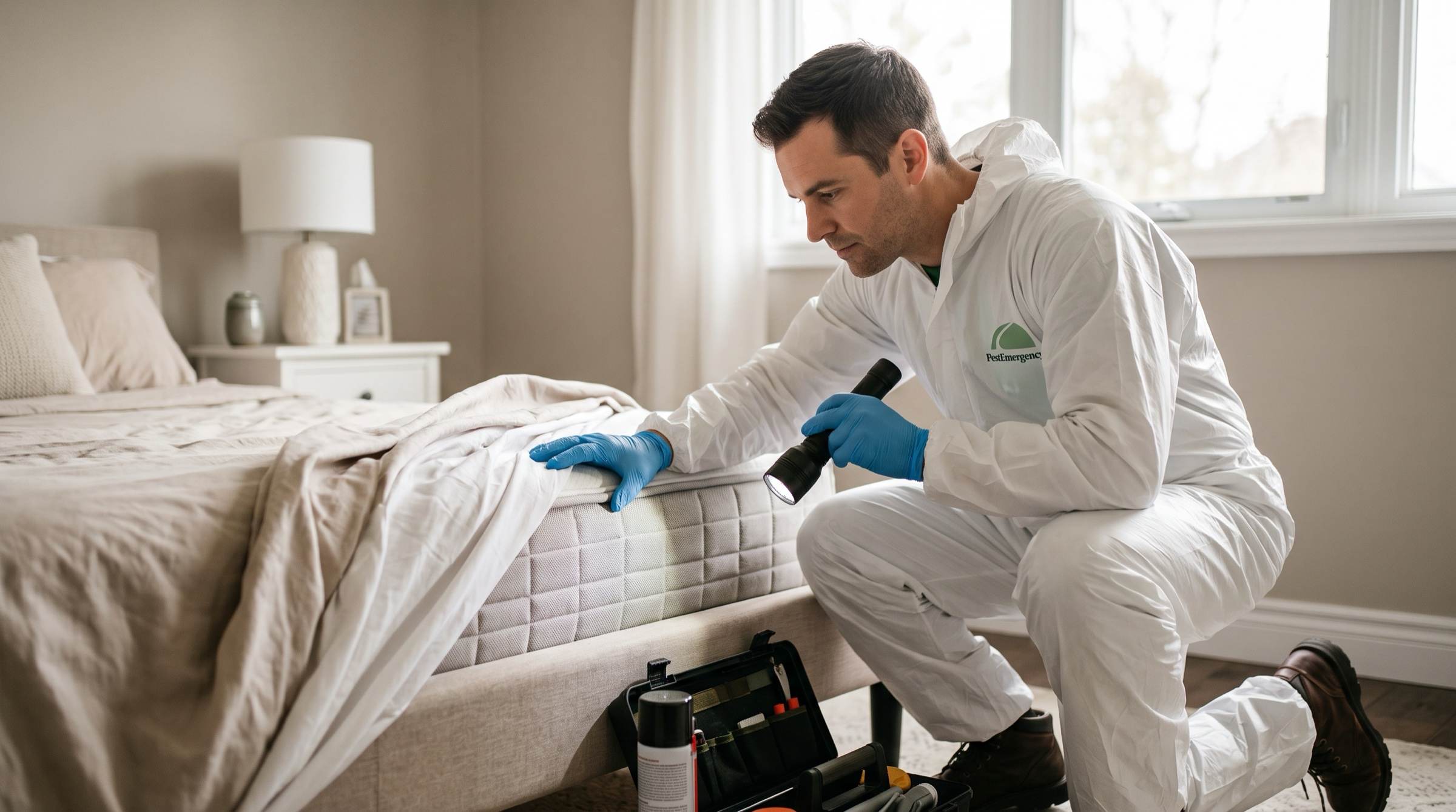
Bed bugs are hard to get rid of on your own. They hide in tiny gaps, they multiply, and many store-bought products miss the eggs. Our bed bug treatment in Ontario follows four steps: inspect, identify, treat and follow up. Request a quote, and you get details in under 30 minutes.
What does bed bug treatment involve?
Every job starts with an inspection. We look at beds, furniture and the spots around them to see where the bugs are and how far they have spread. If you are not sure what you have, our guide to the signs of bed bugs shows what to look for. You can also read about bed bugs: identification and biology.
Then we make sure it really is bed bugs. Fleas, carpet beetles and mites can leave similar marks, and each needs a different plan.
Next comes treatment, tailored to what the inspection found. After that we follow up to check that the bugs are gone. This is the same approach we describe in our IPM approach: look first, use the right tools, then check the result.
Before the visit: what we ask you to do
Preparation makes treatment work better. You will be asked to wash and dry bedding and clothing on high heat, clear clutter near beds and walls, and leave furniture where we can reach it.
Do not move items from room to room. That can spread bugs into clean areas. Our full checklist is in how to prepare for bed bug treatment.
How do you get rid of bed bugs for good?
Health Canada says treatment works best when physical control and prevention are combined, and it recommends a licensed pest control operator for infestations. That is the thinking behind our work.
Non-chemical steps
Physical steps do a lot of the work. These include vacuuming, steaming, heat, freezing and washing. Health Canada lists these as ways to control bed bugs. Heat treatment is best left to professionals.
We also help you cut down hiding places, such as clutter and gaps near the bed, so bugs have fewer places to survive.
Products registered in Canada
Where products are needed, they are applied in targeted spots, not sprayed everywhere. In Canada a pesticide label must show a Pest Control Products (PCP) registration number. A product without one should not be bought or used.
Why ozone generators are not an option
You may see devices that claim to clear bed bugs with ozone. Health Canada advises against them. No ozone-generating device is approved for bed bugs in Canada, and ozone can cause breathing problems.
Can I treat bed bugs myself with store-bought sprays?
You can take safe, physical steps while you wait for help: wash and dry bedding hot, vacuum and seal the bag, and reduce clutter. Spraying is where people run into trouble. Sprays can miss bugs hiding deep in furniture and walls, and they do not reach eggs.
Use only products with a PCP number, and follow the label exactly. Never use foggers or bug bombs in a bedroom. If you see bugs more than once, call a professional.
Follow-up visits: why one visit is rarely the whole job
Insecticides do not get inside bed bug eggs, and eggs take about two weeks to hatch, according to Cornell University. Eggs laid before treatment can hatch after it.
That is why a follow-up two to three weeks later is standard practice. It catches the newly hatched bugs before they grow up and lay more eggs.
Why do I still see bugs after treatment?
A few live bugs in the first days or weeks can be normal. Eggs hatch, and bugs that were hiding may come out. Keep sleeping in your bed and take notes of what you see and where. Tell us at the follow-up. Do not start spraying on top of professional work, since that can scatter bugs.
If you still see bugs after the follow-up, contact us so we can look again.
Do I need to throw out my mattress?
Usually not. Cornell advises against replacing an infested mattress, because a new one will be infested too if the bugs remain. A bed bug-proof mattress cover can help. Ask your technician before you discard anything. Furniture dragged to the curb can spread bugs through a building.
Homes, rentals, condos and shared buildings
Bed bugs move through walls, pipes and shared laundry rooms. In an apartment or condo, a plan that includes neighbouring units is often more successful. We can work with you and your property manager on that. Businesses with several units can read about commercial pest control.
Who pays: landlord or tenant?
Ontario landlords must keep rental units fit to live in and in a good state of repair. Ontario’s Landlord and Tenant Board describes pest control as part of that. As a tenant, report the problem to your landlord in writing right away and follow their instructions for preparing your unit. Rules can depend on your situation, so check with the Board or a tenant legal clinic.
Other biting pests
Bites do not always mean bed bugs. If you have pets, read about fleas, another biting pest.
Areas we serve
We work across the Greater Toronto Area and nearby cities in Ontario. See bed bug treatment in Toronto or Mississauga, or check the list of cities below. We serve Ontario only.
Get a free quote
Ask for a free quote and you will get price details or a call-back in under 30 minutes. Fill in the free quote form or call us. We will then work with you to book the inspection.
How a quote works
Tell us what you found
Describe the pest and the property in a short form.
Quote details in under 30 minutes
Price details by email, or a call from our team.
Under 30 minutes
Treatment visit
A technician treats the problem and explains what to expect.
If pests come back, so do we
Covered visits at no extra cost during your guarantee period.
If pests come back, so do we
If pests return within your guarantee period, we re-treat at no extra cost.
Common questions
How many visits does bed bug treatment usually take?
Plan on more than one. Bed bug eggs can survive a treatment and take about two weeks to hatch, so a follow-up visit two to three weeks later is standard practice. We confirm the plan after the inspection, because it depends on how far the infestation has spread.
Do I have to leave my home during treatment?
Usually you step out while products are applied and wait until surfaces are dry. Your technician will tell you how long, and when it is safe to return. Pets and small children need a plan for that time, so ask before the visit.
Is bed bug treatment safe for kids and pets?
Products used in Canada must carry a PCP registration number from Health Canada, and your technician follows the label. Follow the instructions on staying out and on bedding, and tell us about pets, babies, asthma or allergies before treatment starts.
Do bed bugs mean my home is dirty?
No. Bed bugs travel on luggage, clothing and used furniture, and they feed on people, not on dirt. They turn up in tidy homes, hotels and expensive condos. Clutter does give them more places to hide, which can make treatment harder.
My landlord won't act. What can I do?
Tell your landlord in writing and keep a copy, with dates and photos. Ontario landlords have a duty to keep rental units in a good state of repair, and pest control is part of that. If nothing happens, your local public health unit or the Landlord and Tenant Board can advise you.
How soon will I get quote details?
Send the free quote form or call, and we send price details or call you back in under 30 minutes. That is how fast the quote arrives. It is not a promise of a same-day visit, and we book the inspection with you after that.
Where we offer this
- Pest control in BramptonPest treatment in Brampton for new subdivisions, older towers and basement apartments, with landlord rules explained.
- Pest control in HamiltonBed bug, cockroach and rodent treatment for Hamilton homes, rentals and businesses, with a free quote in under 30 minutes.
- Pest control in KitchenerPest control for Kitchener houses, shared rentals and businesses, with a free quote in under 30 minutes.
- Pest control in MarkhamPest control in Markham for condos, townhouses and heritage homes, with York Region guidance on bed bugs and rodents.
- Pest control in MississaugaMississauga pest control for condos, older townhouses and new subdivisions, with notes on Peel Public Health and tenant rights.
- Pest control in OakvilleOakville pest control for mature lots, newer subdivisions and condos, with a free quote in under 30 minutes.
- Pest control in OshawaOshawa pest control for homes, rentals and businesses, including rats and mice, with a free quote in under 30 minutes.
- Pest control in Richmond HillPest control for Richmond Hill houses, condos and businesses, from fall mice to summer wasps, with a free quote in under 30 minutes.
- Pest control in ScarboroughPest treatment in Scarborough for towers, townhouses and houses, with clear steps for tenants who need a landlord to act.
- Pest control in TorontoBed bug, cockroach and rodent treatment in Toronto, plus who to call about pests in a rental, a condo or your own home.
- Pest control in VaughanPest treatment in Vaughan for larger homes, decks and condos, with York Region guidance on rodents and bed bugs.
- Pest control in WaterlooPest control for Waterloo student rentals, Uptown businesses and homes, with a free quote in under 30 minutes.
Get a free quote
Tell us what you found and where. We send quote details in under 30 minutes.