
Mice in Ontario homes
How to spot mice, why they move in each fall, and what to do next, from sealing gaps to getting a free quote.
When it's active
| Pest | January, current month | February, current month | March, current month | April, current month | May, current month | June, current month | July, current month | August, current month | September, current month | October, current month | November, current month | December, current month |
|---|---|---|---|---|---|---|---|---|---|---|---|---|
| Mice pest page | active | active | active | quiet | quiet | quiet | quiet | quiet | active | peak | peak | active |
- Quiet
- Active
- Peak
- Outlined column = now
If you have heard scratching at night or found droppings in a cupboard, you may have mice. It is common in Ontario homes, and it is fixable. Here is how to confirm it, what to do first, and when to call a professional.
What do mice look like?
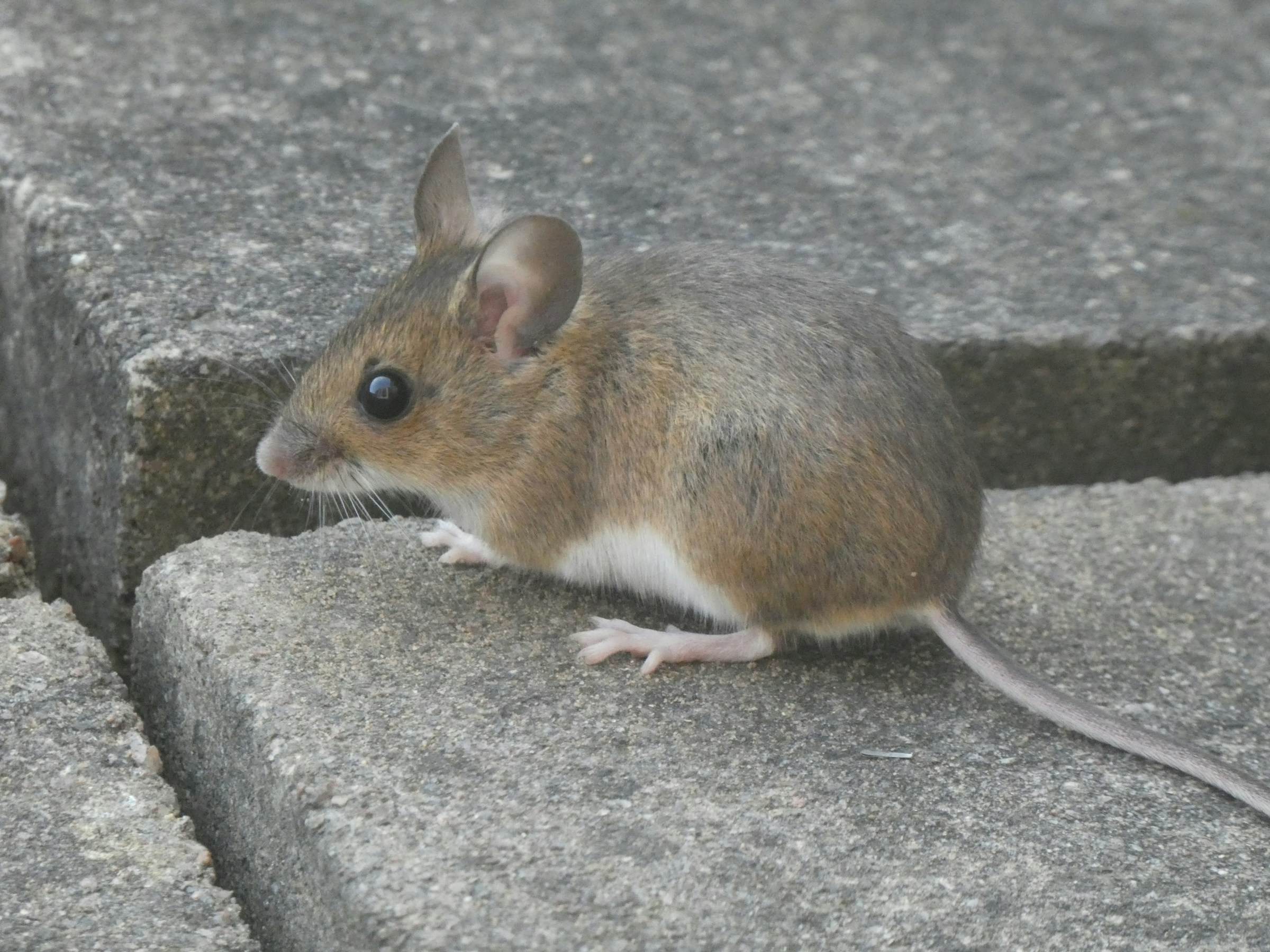
The house mouse is small, usually grey or light brown, with a pointed nose, large ears and a long, thin tail. An adult fits easily in the palm of your hand.
Young rats can be mistaken for mice. Our guide to mice vs rats shows how to tell them apart. If you think you may have rats, it is worth checking, because the sealing and treatment work is different.
How do I know it’s mice?
Mice are shy and active at night, so you often see signs before you see the animal.
- Droppings. Small, dark and pointed at the ends, often along walls, in drawers and behind appliances.
- Scratching or scurrying. Noises in walls, ceilings or under floors, mostly at night.
- Gnawed packaging. Torn cereal boxes, chewed bags and crumbs where food is stored.
- Nesting material. Shredded paper, fabric or insulation tucked in a quiet corner.
- Greasy rub marks. Dark smudges along baseboards where mice run the same path.
- A stale, musky smell in closed-in spaces.
Droppings in several rooms usually mean more than one mouse.
Why am I hearing scratching in the walls at night?
Mice are most active after dark, when the house is quiet. Walls and ceilings give them hidden routes between nests and food. Scratching, scurrying or light squeaking in those spaces is a classic sign. A wall that is noisy for several nights in a row points to a nest nearby.
How do mice get in?
Mice squeeze through far smaller gaps than most people expect. Extension sources say a house mouse needs only a little more than a quarter inch (about 6 to 7 mm), roughly the width of a pencil. They can also gnaw a small gap wider.
Common entry points:
- Gaps around pipes and wires where they enter the house
- Cracks in the foundation
- Worn door thresholds and gaps under doors
- Dryer, attic and soffit vents without fine metal mesh
- Garage doors with worn seals
Health Canada suggests metal weather stripping under doors, steel wool stuffed around pipes before caulking, and fine metal mesh over vents.
Are mice dangerous?
Mice are more a health and property concern than an immediate danger, so stay calm and act steadily.
Health Canada says mice and rats can carry disease and damage property. It also names the deer mouse as the most common carrier of hantavirus. Droppings and nests can contaminate food and surfaces, and mice chew wiring and insulation.
That is why cleanup matters. Wear rubber gloves and a dust mask, dampen droppings with a bleach and water solution before wiping, and never sweep or vacuum them dry. Wash your hands afterward.
Why do mice come in during fall?
When nights cool down in Ontario, mice look for warmth, food and shelter. That is why our busiest season for mice runs from October to March. Houses with gaps in the foundation, attached garages or cluttered storage are easy targets, as are older homes and apartment buildings where mice travel between units.
What should I do now, and what should I avoid?
Do:
- Store dry food and pet food in metal or glass containers.
- Keep garbage in containers with tight lids.
- Clear clutter in the garage, basement and storage areas.
- Raise woodpiles about 30 cm off the ground and away from the house.
- Fix leaking taps and sweating pipes.
- Seal gaps with steel wool, metal mesh or caulk once you know the animals are out.
Avoid:
- Using loose poison. Rodent baits are toxic to children and pets and should only go in tamper-proof bait stations.
- Sealing every hole before you know whether mice are still inside. They can get trapped in walls.
- Relying on one trap. Where there is one mouse, there are usually more.
How does professional treatment work?
We follow four steps, the same ones explained in our integrated pest management guide:
- Inspect. Look for droppings, gnaw marks, runways and entry points.
- Identify. Confirm it is mice and not rats, and work out how many areas are affected.
- Treat. Control the mice and close the routes they use.
- Follow-up. Check that the problem has stopped.
Our rodent control page explains the service in more detail. Mice also show up in restaurants, warehouses and rentals, so we handle commercial pest control too. We serve homes across Ontario, including Kitchener.
Get a free quote
Tell us what you are seeing and where. Quote details reach you within 30 minutes of your request. Request a free quote or call us using the number at the top of the page.
Common questions
Can mice chew through walls?
Mice gnaw to wear down their teeth and can enlarge a small gap in drywall, wood or soft materials. Metal mesh and steel wool are harder for them to get through, which is why sealing uses those.
Is peppermint oil effective against mice?
Health Canada's prevention advice centres on sealing gaps, removing food and clearing shelter, not scents. Don't count on peppermint to end an infestation. Sealing and treatment are what work.
Do I need gloves to clean up mouse droppings?
Yes. Health Canada advises rubber gloves and a dust mask. Dampen droppings before wiping, and never sweep or vacuum them dry, because that raises dust you can breathe in.
Do mice carry disease?
They can. Health Canada notes that mice and rats can carry disease, and that the deer mouse is the most common carrier of hantavirus. Careful cleanup and sealing entry points lower your exposure.
Will a cat solve a mouse problem?
Rarely. A cat may catch the odd mouse, but mice breed quickly and hide in walls and voids. You still need to seal entry points and remove food and shelter.
Do mice leave on their own?
Usually not. A warm home with food and shelter is a reason to stay. Without sealing and treatment, the problem tends to continue through winter.
Services that treat this
Get a free quote
Tell us what you found and where. We send quote details in under 30 minutes.